
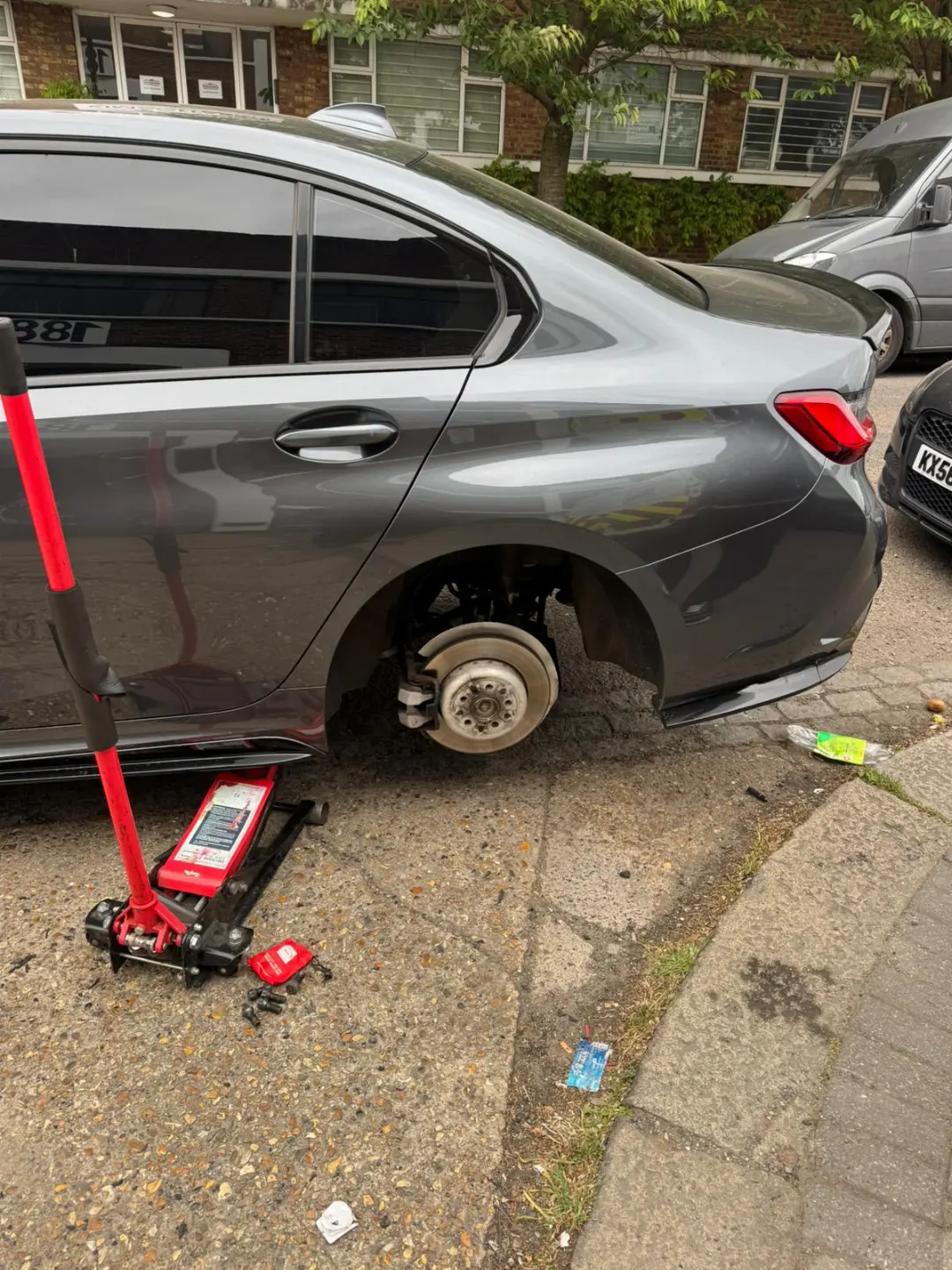
Suffering a flat tyre on a busy London road or highway is one of the most frustrating experiences a driver can face. When you discover a nail or screw embedded in your tread, your immediate thought is often: "Can this puncture be repaired, or do I need to pay for a brand new tyre?"
At Tyres & Tyres, our 24/7 mobile mechanics strictly follow the official British Standard BS AU 159 guidelines when assessing puncture repairs roadside. In this guide, we break down what determines whether a tyre can be safely repaired on location or must be replaced.
1. The BS AU 159 Standard: What Is It?
In the United Kingdom, all professional tyre repairs must adhere strictly to BS AU 159. This standard defines the exact location, size, and method of repair permitted on passenger vehicle tyres. The primary purpose of BS AU 159 is structural safety—ensuring that a repaired tyre can withstand high speeds, heavy loads, and adverse weather conditions without risk of catastrophic blowout.
2. The Safe Repair Zone (Central 60-70%)
Not all areas of a tyre are equal. A puncture can only be legally and safely repaired if it is located within the central 60% to 70% of the tread area (known as the Minor Repair Zone). Punctures located in the outer shoulders or sidewalls cannot be repaired under any circumstances because these regions experience continuous flex during steering and cornering.
3. Maximum Permitted Damage Size
According to BS AU 159, the maximum diameter of damage permitted for a minor repair on passenger car tyres is 6mm. If the penetrating object (such as a large bolt or metal shard) has created a hole larger than 6mm, or if there is tearing of the internal steel belts, the tyre cannot be safely plugged or vulcanized.
4. Reasons a Puncture Cannot Be Repaired Roadside
Our mobile mechanics will conduct a thorough internal and external inspection before attempting any repair. A tyre must be replaced if:
- The vehicle was driven on the flat tyre, causing internal rubber dust or sidewall creasing (run-flat damage).
- There is existing tread depth below the legal limit of 1.6mm across the central tread.
- The tyre shows signs of rubber aging, bulging, or bead damage.
- The tyre has previously undergone secondary non-standard string plug repairs.
Need Emergency Puncture Repair in London?
Our 24/7 mobile tyre vans carry full professional BS AU 159 plug-and-patch repair equipment as well as brand new replacement tyres in all standard sizes.
Call 24/7 Hotline: +44 7466 6102325. Why String Plugs Are NOT Legal Standalone Repairs
You may see emergency temporary "string plug" kits sold online. It is crucial to understand that external string plugs applied from the outside without demounting the tyre are strictly temporary measures intended only to get a vehicle off an immediate hazard. BS AU 159 requires a combination stem-and-patch repair applied from the inside of the tyre after demounting.
Summary
If your puncture is under 6mm, located in the central tread, and the tyre was not driven while flat, our mobile technicians can complete a full BS AU 159 repair right at your roadside location in 20-30 minutes. Contact Tyres & Tyres 24 hours a day for immediate response across Greater London.