
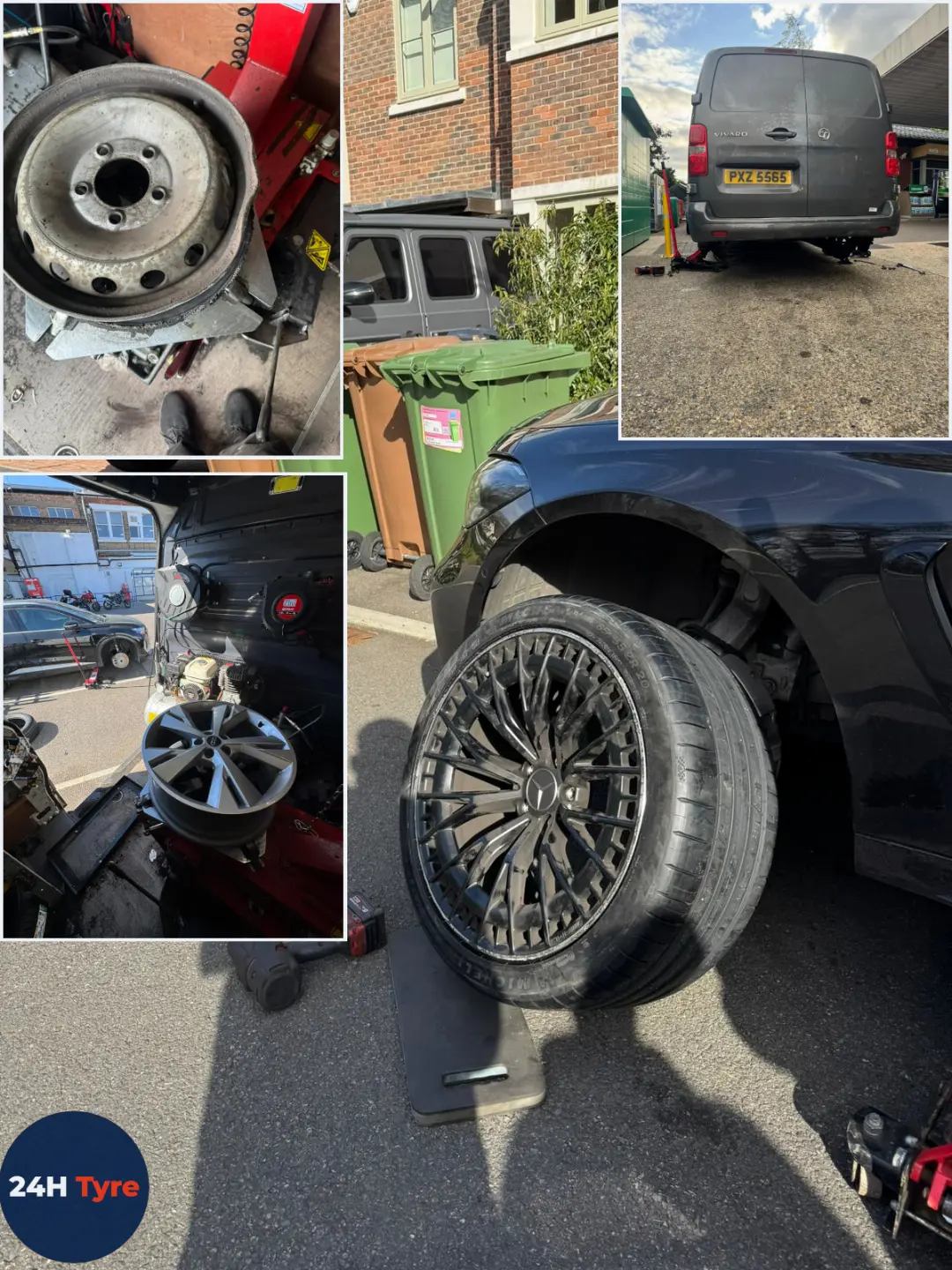
Potholes are an everyday hazard on London roads. Weather cycles and heavy traffic break open sharp craters along commuter routes. A hard impact can damage a tyre or wheel even if the car feels fine afterwards. Internal tyre damage can be hidden, meaning a tyre looks normal outside while structural plies have failed inside.
Straight After the Hit
Straight after hitting a pothole, stay calm and avoid sudden reactions. Do not brake sharply or swerve across lanes in traffic. Keep a firm hold on the steering wheel and reduce your speed gradually.
Check your mirrors and find a safe place to stop when you can. Hazards on if needed, and never stop in a live running lane or on a blind bend. Pull into an official layby, parking bay, or quiet residential road where you can inspect your vehicle safely.
Safety Reminder: Do not step out into live traffic. Switch on your hazard lights, exit through the passenger side if parked beside traffic, and stand in a secure, well-lit area away from moving vehicles.
What to Check When It Is Safe
Once safely parked with the handbrake set and the engine off, conduct a careful visual inspection of your wheels and tyres using a torch if visibility is poor. Look out for the following warning signs:
- Sidewall bulges and splits: Check for any raised blister or bubble on the tyre sidewall, which occurs when internal cords snap under impact. Also inspect for cuts or splits sliced into the rubber.
- Falling pressure: Look at the tyre contact patch. If the rubber is squatting noticeably or hissing, air is escaping.
- Bent or cracked alloy wheel: Inspect the wheel rim edge for dents, flat spots, or hairline fractures that break the airtight bead seal.
- Vibration through the steering wheel: A noticeable steering shudder often indicates a bent wheel rim or thrown balance weights.
- Car pulling to one side: If the vehicle drifts off line when driving straight, suspension alignment may be shifted.
- Pressure warning light: A glowing TPMS light confirms tyre pressure loss.
- New mechanical noises: Scraping, thumping, or rubbing noises from the wheel arch indicate displaced trim or mechanical damage.
Remember that internal tyre damage is often invisible from outside. The outer rubber may look undamaged while the internal steel plies and cords have fractured, leaving the tyre vulnerable to a sudden blowout later at higher speeds.
When Not to Keep Driving
Do not attempt to continue your journey if you discover an external sidewall bulge, a deep cut exposing internal cords, rapid loss of pressure, a bent or cracked wheel rim, or severe steering vibration. Driving on a structurally damaged tyre risks sudden tyre deflation, loss of steering control, and expensive alloy rim destruction. Stop safely and contact professional mobile flat tyre assistance.
Alignment and Suspension
A violent pothole impact transfers substantial force straight into your vehicle's tracking, tie rods, and suspension components. A reputable garage can inspect steering geometry and mechanical components on a ramp.
We are a dedicated 24/7 mobile tyre fitting service, focusing on roadside tyre replacement and electronic wheel balancing; we do not carry out garage wheel alignment or mechanical suspension repairs.
Can a Damaged Tyre Be Repaired?
While minor nail punctures in the central tyre tread can frequently be fixed with an on-site puncture repair, pothole impact damage almost always requires a replacement tyre. Safety guidelines strictly prohibit repairs to tyre sidewalls, shoulders, or bead areas where structural plies have been strained or broken. Our mobile technician inspects the damage on site to ensure safe replacement.
Reporting a Pothole
In London, road responsibility depends on the highway authority. Local borough councils manage residential and town roads; Transport for London (TfL) maintains Red Routes like the A406, A40, and A4; and National Highways oversees motorways like the M25. Search your borough council's website or GOV.UK to find the reporting form.
Compensation Claims
Some drivers apply to the responsible authority to claim for damage. Outcomes depend on circumstances and evidence, as authorities have statutory defences if inspections showed no prior defect. If exploring a claim, photograph the pothole with a reference object for scale, note the date and location, and keep receipts. Check current guidance on GOV.UK or with your council; this is not legal advice and we do not handle claims.
How We Can Help
Tyres & Tyres Ltd provides 24/7 mobile tyre fitting dispatched directly from our base at 189C Brent Crescent, Park Royal, NW10 7XR. Usually 15-30 minutes in NW10 and nearby West and North West London; longer further out. We confirm your arrival time when you call. Simply call our dispatch team with your vehicle location and tyre sidewall details, and we will confirm tyre availability and pricing before setting off.
Stranded by a Pothole in London?
Our mobile vans operate 24 hours a day across West and North West London. Call now or send a WhatsApp location pin for rapid assistance.
Call 07466 610232 WhatsApp Location