
Quick takeaway: Winter tyres are not a legal requirement anywhere in the UK. For most London drivers tackling urban traffic, quality all-season tyres or healthy summer tyres with good tread depth are usually sufficient. However, for motorists commuting before dawn on untreated roads, living on steep hills, or travelling beyond the M25, winter tyres offer valuable cold-weather grip.
As temperatures drop across London, many motorists ask whether they need winter tyres. While several European nations mandate them in winter, the UK has no such law. The choice remains entirely up to each driver.
The honest answer is that it depends on where and when you drive. Here is a clear, practical guide to winter, all-season, and summer tyres, helping you decide what makes sense for your London driving.
What Winter Tyres Are
Winter tyres are engineered for temperatures below 7°C. Standard summer rubber stiffens in freezing weather, reducing grip on cold roads. In contrast, winter tyres use higher silica compounds to stay supple, keying directly into cold surfaces.
Their tread patterns feature thousands of tiny zig-zag slits called sipes. As the tyre rolls, these sipes flex and bite into frost, cold slush, and snow, while wide channels disperse standing water to prevent aquaplaning. Importantly, winter tyres are not legally required in the UK; drivers are free to choose the tyre setup that suits their mileage and driving habits.
Summer, All-Season, and Winter Tyres
Choosing the right tyre comes down to how each category handles British weather:
- Summer Tyres: Designed for temperatures above 7°C. They deliver sharp handling, low rolling resistance, and short stopping distances in warm dry and wet conditions, but stiffen in cold winter snaps.
- All-Season Tyres: A balanced compromise avoiding twice-yearly tyre swaps. Blending cold-weather flexibility with moderate sipes, they handle British winter rain and mild frost reliably.
- Winter Tyres: Dedicated cold-weather specialists. They offer outstanding grip, steering stability, and braking on ice, snow, and freezing wet roads, but wear faster when temperatures exceed 7°C.
How to Recognise Winter and All-Season Tyres
True winter capability is certified on the tyre sidewall. Look for the Three-Peak Mountain Snowflake (3PMSF) symbol—an embossed mountain outline enclosing a snowflake. This mark proves the tyre has passed standardised testing for cold-weather traction and braking.
Some tyres only feature an "M+S" (Mud and Snow) stamp. M+S indicates tread pattern geometry rather than certified cold-weather braking performance. Many modern all-season tyres also carry the 3PMSF symbol. If you are uncertain about your current tyres, inspect the sidewalls or ask your local fitter.
Do You Need Them in London?
London rarely experiences prolonged snowfall. Urban density, traffic flow, and gritting keep most city roads clear and slightly warmer than surrounding countryside.
Consequently, motorists driving mainly within the North and South Circulars manage safely on good summer or all-season tyres. However, dedicated winter tyres make genuine sense if you:
- Drive during early morning shifts before council gritters have treated secondary roads.
- Live near steep hills or ungritted residential streets in outer London boroughs.
- Regularly travel outside the city across unlit rural roads, commuter belts, or motorways.
- Rely on commercial vans or private hire vehicles that cannot afford downtime in severe weather.
Whatever Tyres You Have, Check These Before Winter
Cold weather exposes any existing weakness in your tyres. Before temperatures plummet, complete these routine checks:
- Tyre Pressure: Ambient cold naturally lowers tyre inflation pressure. Under-inflated tyres degrade steering response and fuel economy. Check pressures monthly when cold using your vehicle handbook or door-pillar placard. We also offer a mobile tyre pressure check at your home or workplace.
- Tread Depth: The UK legal minimum is 1.6 mm across the central three-quarters, but wet and cold braking worsens significantly below 3 mm. Many experts advise earlier replacement for winter grip.
- Cracks and Bulges: Inspect sidewalls for damage, cuts, or bulges caused by potholes and road debris. Winter road salt and curb scuffs also cause bead leaks; see our advice on alloy wheel refurbishment & rim repairs.
- Uneven Wear: Edge wear often points to misaligned wheels or steering tracking faults.
- Spare Tyre & Locking Nut Key: Ensure your spare tyre is inflated and your locking wheel nut key is in the car. If your key is missing or damaged, we provide mobile locking wheel nut removal.
Fitting a Full Set
If fitting winter tyres, replace all four wheels together. Fitting them only to the drive axle causes traction imbalances that can trigger skids when braking or cornering. While mixing tyre types is not illegal in the UK, tyre experts advise against it.
Can We Help?
Tyres & Tyres is a 24/7 mobile tyre fitting service based at 189C Brent Crescent, Park Royal NW10. We dispatch mobile workshops across London to fit new tyres, repair punctures, and resolve roadside emergencies.
Tell us what you drive and what you are looking for, and we will confirm what we can fit when you call.
If You Get a Flat on a Cold, Wet Night
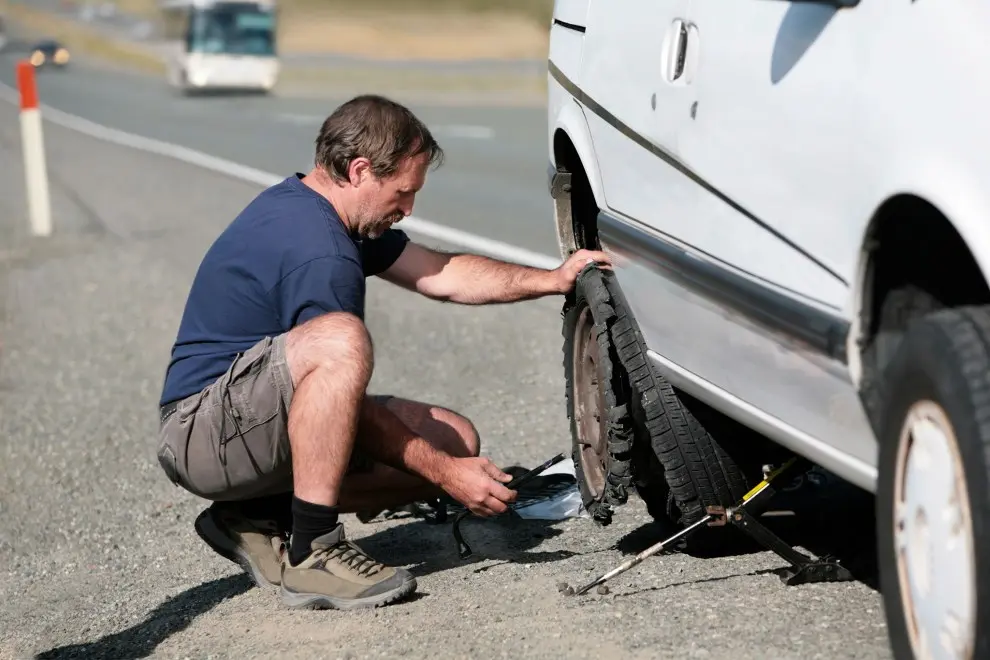
Winter tyre trouble often strikes on dark, cold evenings. If your tyre loses air suddenly, follow these three steps:
- Pull Over Somewhere Safe: Turn on hazard lights and steer clear of live traffic into a lay-by or side road. If on the North Circular, see our guide on flat tyres on the A406.
- Stay Away from Live Traffic: Exit through passenger doors and stand safely on the pavement or behind a barrier.
- Call for Mobile Assistance: Contact our dispatch team for on-site replacement or repair. For details, see our flat tyre help service.
Need Emergency Mobile Tyre Fitting in London?
Our mobile tyre fitting technicians are on standby 24/7 across Greater London, arriving with professional tyre changing and wheel balancing equipment.
Frequently Asked Questions
Are winter tyres compulsory in the UK?
No. Winter tyres are not compulsory in the UK. You may legally drive on summer, all-season, or winter tyres throughout the year, provided they have at least 1.6 mm of tread and remain in safe, roadworthy condition.
Can I use all-season tyres instead?
Yes. For most London drivers, modern all-season tyres with the 3PMSF snowflake symbol provide dependable cold and wet traction without the need to swap tyres twice each year.
Should I change all four tyres?
Yes. Tyre professionals strongly advise changing all four tyres together to avoid grip imbalances that can cause skids during sudden braking or turns.
How do I know if my tyres are still safe?
Check that tread depth exceeds 1.6 mm (ideally 3 mm for wet cold weather), inspect sidewalls for cracks or bulges, and maintain recommended cold inflation pressures.